Claude Code's New Agent View Makes Multi-Agent Real. Your Quota Just Got Five Times More Important.
Anthropic launched Agent View in Claude Code: a unified list of all your sessions, inline peek replies, and /bg to background tasks. Here is what shifts.
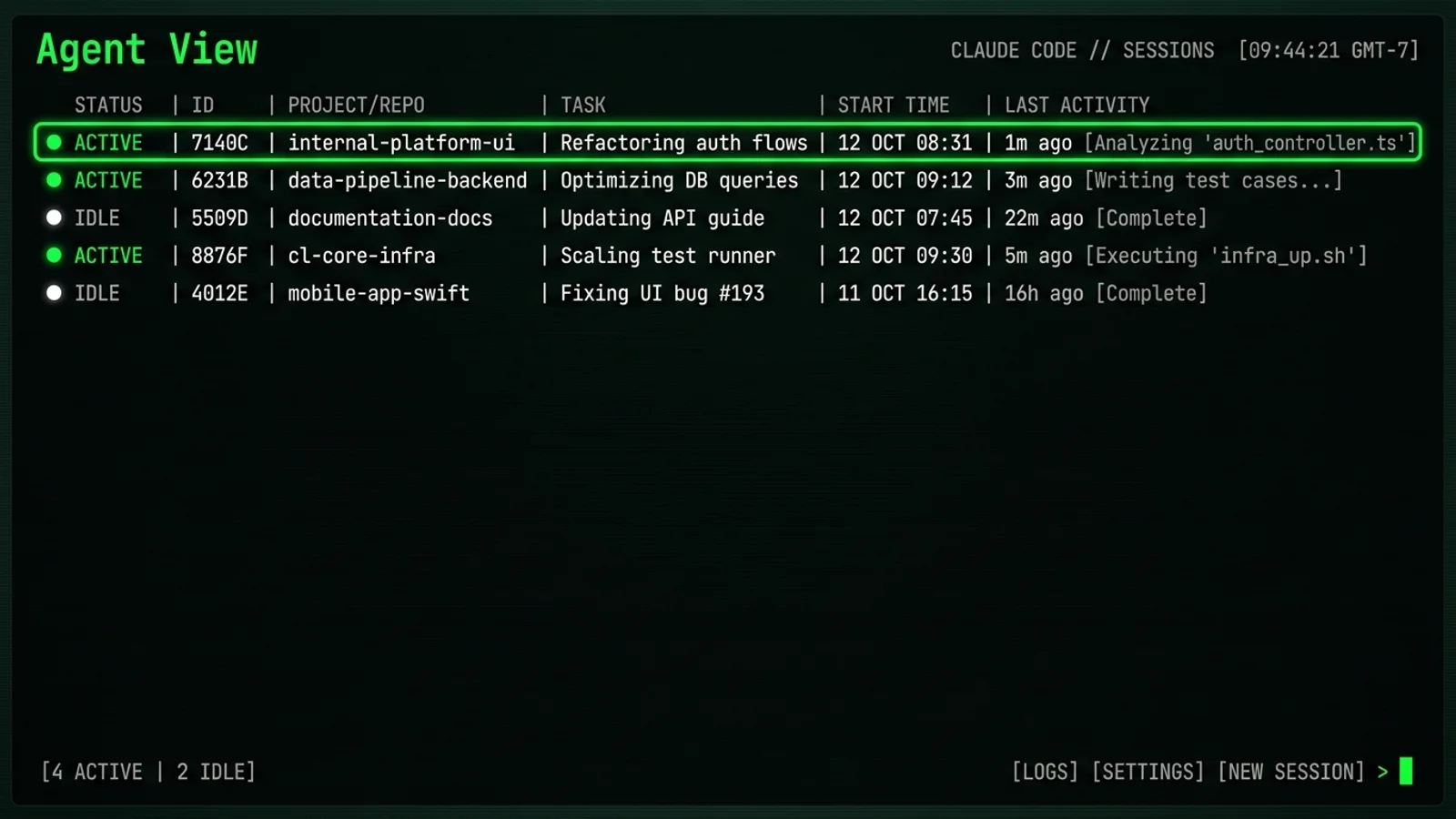
Last night, on 11 May 2026, Anthropic quietly shipped a new feature in Claude Code: Agent View. One command, claude agents, and every active session lines up in a single unified view. No more juggling five tmux tabs to figure out which agent is waiting for input, which is still working, and which has already opened its PR.
It is launching as a Research Preview. It is live today on Pro, Max, Team, Enterprise, and the API.
Behind this small UI addition sits a much bigger signal. Anthropic is officially endorsing the orchestrator plus parallel agents pattern. The way of working that used to be a power user hack is now the path the vendor itself is laying out.
The three commands to know
The interface comes down to three entries:
| Command | What it does |
|---|---|
claude agents (or left arrow) | Opens the unified view of all your sessions |
/bg | Sends the current session to the background |
claude --bg [task] | Launches a new session directly in the background |
Each row in the list shows the session identifier, its status (waiting for input or actively working), the content of the last response, time elapsed since the last interaction, and a PR indicator when one is open.
It is the screen everybody was hand-rolling with tmux, screen, or by stacking iTerm windows. Except now it is native.
Peek is the part that actually changes things
The rest is not revolutionary on its own. The real change is peek.
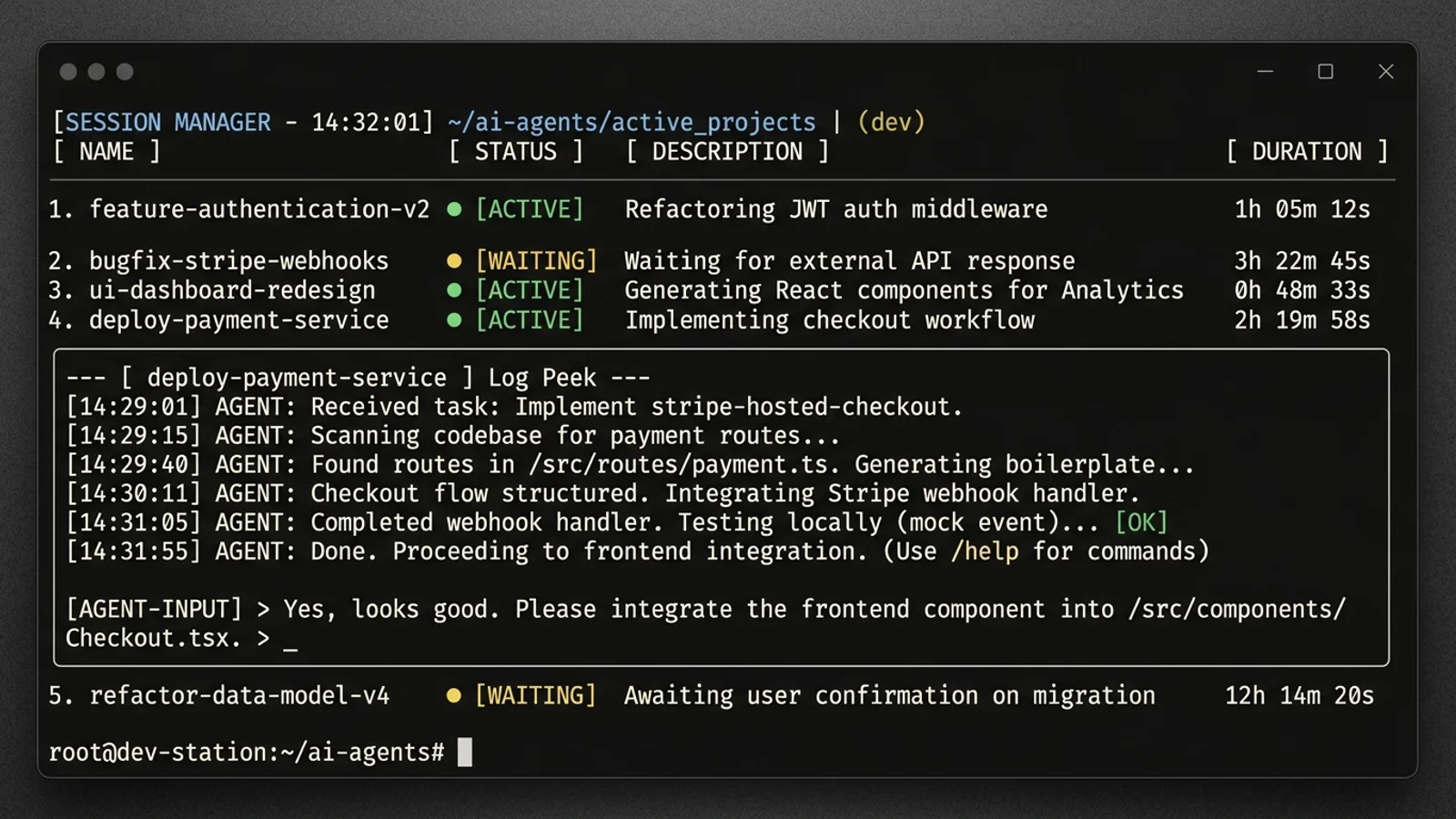
You hover over a session, you see its last turn without entering it. If the agent is waiting for a reply, you type inline from the view. The session resumes on its own. To open the full transcript, you press Enter.
Concretely: you can unblock five agents in fifteen seconds without breaking your mental context. That is what makes the multi-agent pattern viable in practice, not just on paper.
The mental cost of context switching was the real barrier to parallel orchestration. At five agents, you spent more time remembering who was doing what than actually shipping. Peek removes that cost for short interactions.
The pattern this officializes
Before Agent View, running three Claude Codes in parallel was technically possible but socially weird. It was a power user thing. You had to explain it.
Now it is in the official docs. Anthropic is essentially saying: this is how we expect you to use the tool on real workloads.
The recommended pattern becomes:
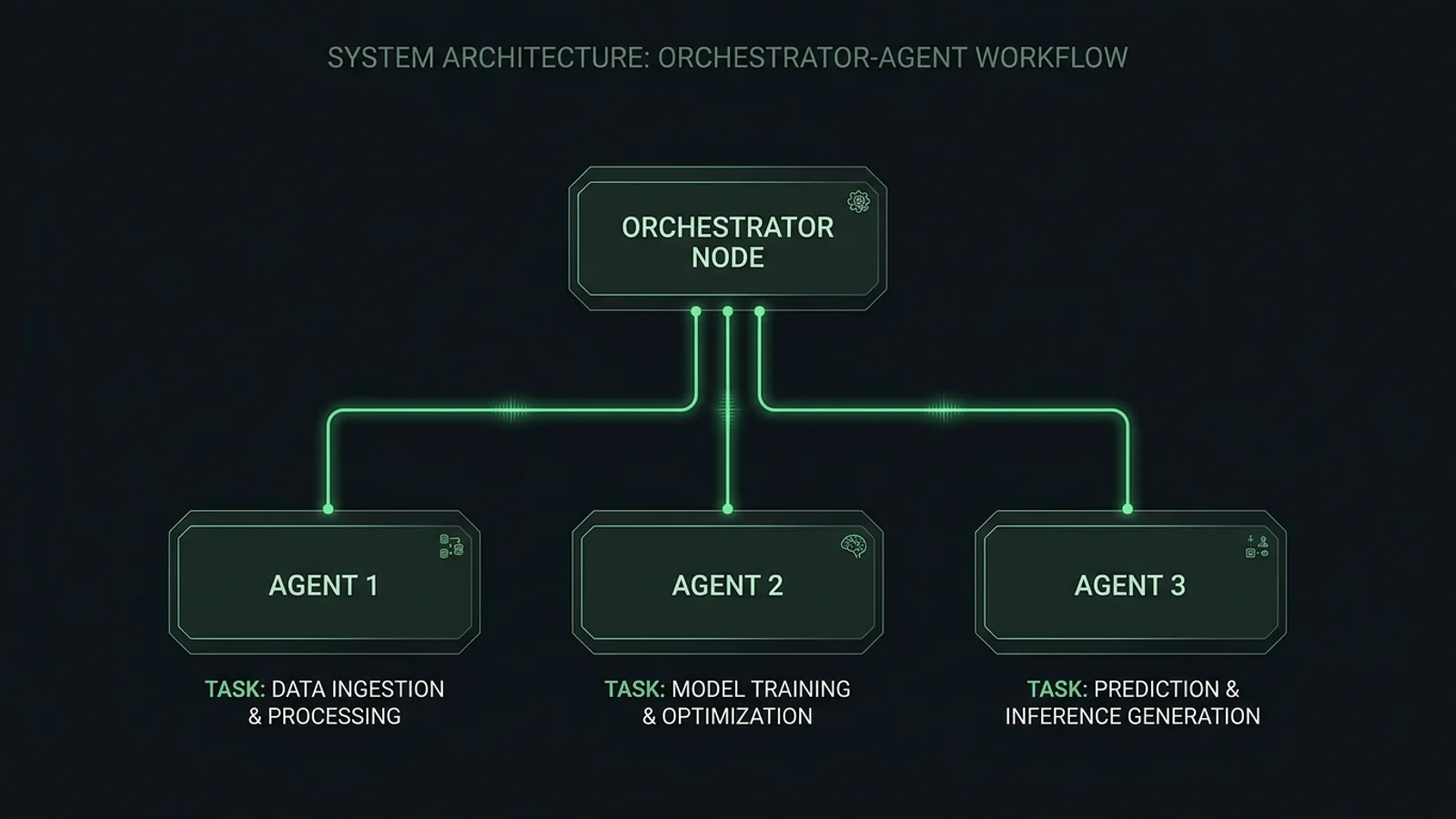
- An orchestrator in the foreground that steers, decides, and validates.
- N agents in the background running delegated tasks in parallel.
- Peek for quick check-ins, attach for sessions that need deep work.
It is the pattern you already see on serious setups. Anthropic is standardizing it and making it comfortable.
Concrete use cases
The Anthropic post mentions:
- Dispatching multiple parallel tasks with optional skill pairing.
- Running long loops (scheduled PR reviews, dashboard updates).
- Switching quickly between related sessions.
- Scanning at a glance which tasks produced a PR.
For teams already doing code-as-content (solo devs, production agencies, makers in continuous shipping mode), this matches the rhythm. You kick off a refactor in the morning with claude --bg, you tackle another piece in the foreground, you peek every hour.
For orchestrator plus workroom setups (the pattern we use ourselves on the tokenkarma side), it is even cleaner. The root interactive session becomes the inbox, and each workroom runs in --bg with its own scope.
The hidden cost: token multiplication
Here is the part the first wave of enthusiastic posts is not going to tell you.
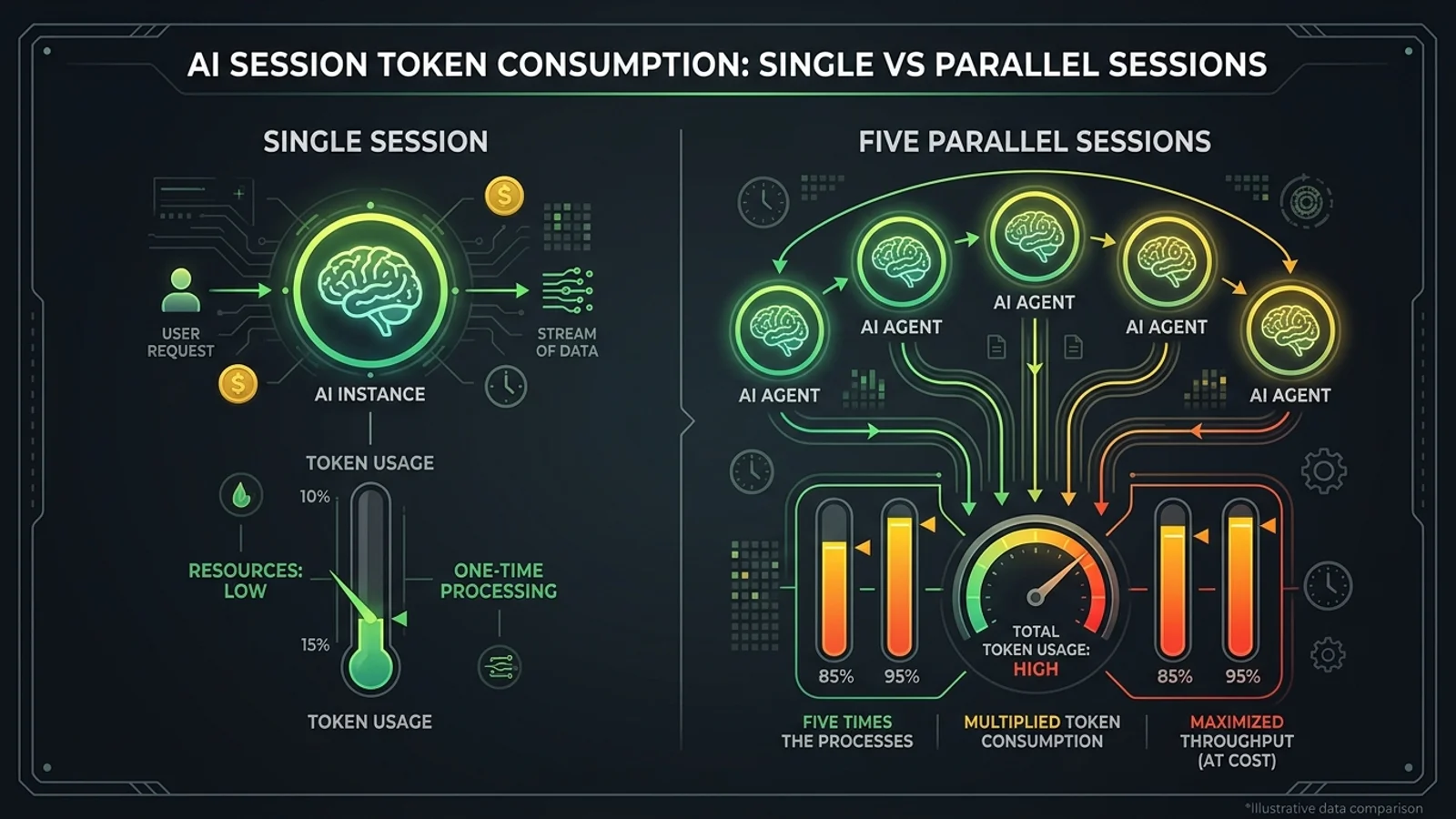
Before Agent View, you had one active session at a time. Even if you launched two or three, friction pulled you back to one. You burned tokens at your human pace.
With five agents running in parallel for real, you burn five times the tokens per hour. Without realizing it, because peek makes it feel free.
Anthropic just raised Claude Code and API limits last week, on the back of the SpaceX compute deal (we covered that here). It is no coincidence that Agent View ships right behind it. The product is pushing toward parallel usage because the limits finally allow it.
But a higher limit is still a limit. And parallel consumption is consumption most users do not see coming.
The reflex to build:
- Check your five-hour window before kicking off a salvo of agents.
- Tell apart tasks that deserve a dedicated agent from tasks one agent can chain.
- Keep an eye on total account consumption, not just the foreground session.
That is exactly the gap claudeKarma fills: knowing where you are in your quota cycle before the wall hits, no matter how many sessions are open in parallel.
What changes in your workflow today
If you use Claude Code solo on one project at a time, Agent View does not change much for you. Keep your single session, ignore claude agents.
If you are orchestrating multiple workstreams in parallel, three concrete moves:
- Learn the shortcut. Left arrow to open the view. It is a muscle memory worth installing once and for all.
- Migrate your tmux sessions to
--bg. You gain the unified list, peek, and PR indicators without breaking anything else. - Put a guardrail on your consumption. Whether that is claudeKarma, a homemade dashboard, or just a habit of running
/usageevery two hours. Agent View gives you the power to burn tokens five times faster. You want to know that before the bill lands.
Anthropic shipped the feature that makes multi-agent comfortable. Up to you to turn it into a productive edge without letting it turn into a surprise invoice.
Now available
Stop guessing your AI limits
The Mac app and web dashboard watch your Claude, ChatGPT, Gemini and more, and warn you before quotas hit.