ChatGPT Pro 500: $500 Tier, Half the Usage on $200
OpenAI launched a $500 ChatGPT Pro 500 tier at DevDay and reopened the $200 Pro plan with half the compute. What the new meter means for heavy users.
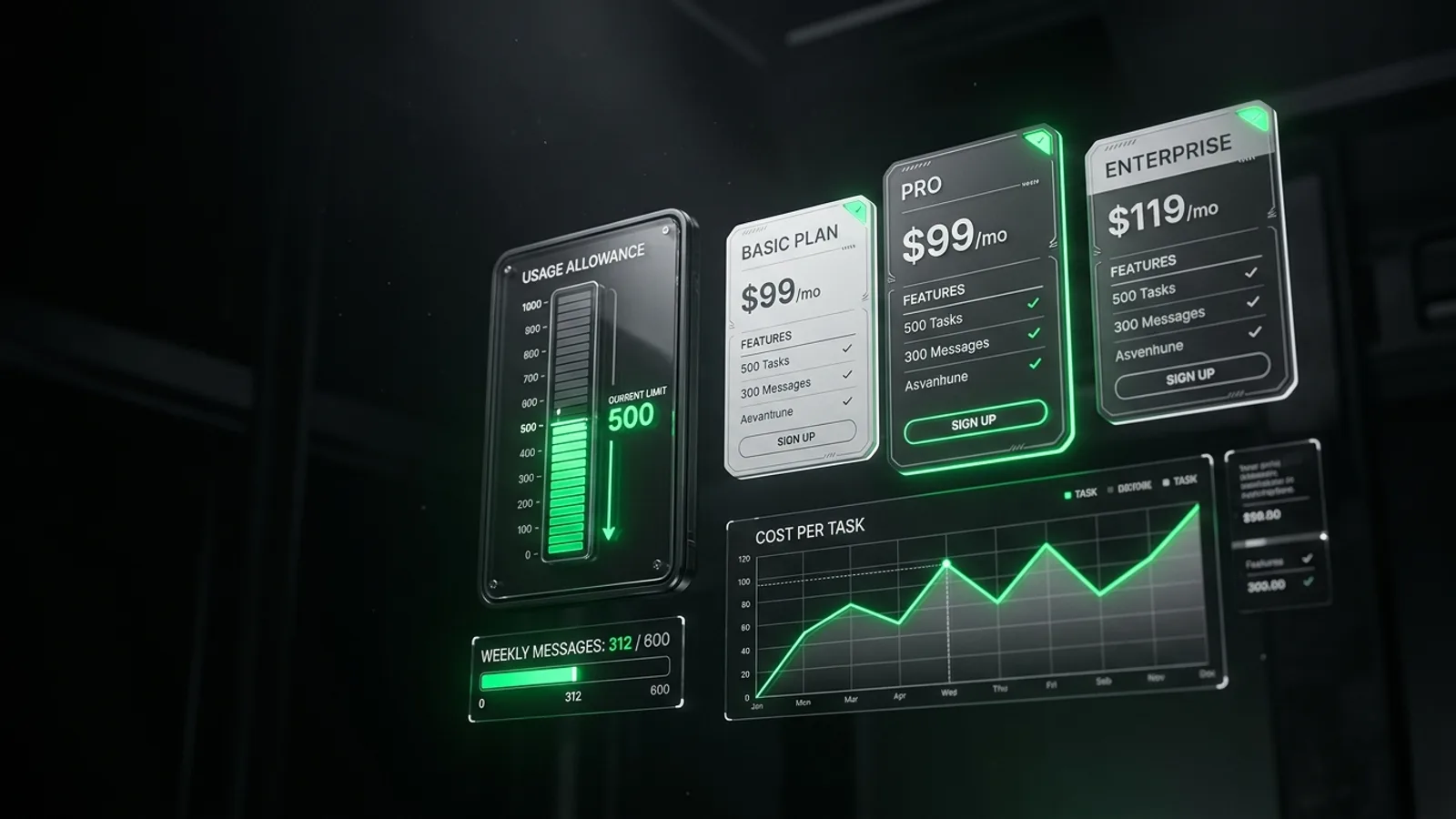
ChatGPT Pro 500: $500 Tier, Half the Usage on $200
OpenAI used its 2026 DevDay window to do something it had never done before: sell a ChatGPT subscription named after its price. ChatGPT Pro 500 costs $500 a month, a $300 jump over what was the company’s most expensive plan 24 hours earlier. The same announcement reopened the $200 Pro tier that OpenAI had frozen on September 10, and reopened it with roughly half the compute. Searches for “chatgpt pro price” sit at 3,600 a month and “chatgpt usage limits” is up 31% in three months, which tells you the audience this lands on: people who read the pricing page like a contract.
The short version: OpenAI added a higher ceiling, lowered the old ceiling, and renamed the tiers so the number equals the invoice. For anyone running a real workload on a consumer subscription, that is three separate changes to model at once.
What changed, exactly
ChatGPT Pro 500, at $500 per month, includes access to “Ultrafast” mode for GPT-6 Astra inside ChatGPT Work and Codex. OpenAI says Ultrafast delivers an 8x speed increase in Codex. The tier carries the highest included usage OpenAI sells, and a one-time credit top-up during the transition that some subscribers valued around $2,500 of API spend.
The changes to the $200 Pro tier are the part that affects more people. Per OpenAI’s own help documentation and engineering lead Thibault Sottiaux’s note, new $200 subscriptions get:
- An allowance of 10x the $20 Plus plan, down from the previous 20x multiplier
- GPT-6 Pro messages cut from 200 to 100 per week
- Grandfathered usage for existing subscribers, which expires at the end of October
Sottiaux framed the arithmetic as neutral: the new arrangement “nets out at half the dollar in API spend compared to the prior plan.” Reading it plainly, OpenAI is telling you the $200 tier now buys a different amount of work than it did last week, and the reason given is that the models got more efficient. That is the same argument a carmaker makes when the engine gets smaller and the sticker does not move.
The mechanics matter more than the framing. Three meters now interact on a Pro account: the rolling session allowance, the weekly GPT-6 Pro message cap, and whichever per-product limit applies to Codex and ChatGPT Work. Ultrafast on Pro 500 drains the allowance faster than standard mode, so the speed upgrade is also a spend upgrade. The 5-hour window restrictions were relaxed on the top tier specifically, which is worth knowing if your work pattern is bursty rather than steady.
Cross-provider: this is now an industry pattern
None of this is unique to OpenAI, and heavy users should stop treating each change as a one-off. Anthropic shipped a weekly limit on Claude Max months after launch, then faced a class action over how the 5x and 20x multipliers were described. OpenAI reimposed a 5-hour Codex cap for Plus and Business earlier in September and staged a global usage reset at the same time. Both providers have spent 2026 trimming allowances on consumer tiers while adding higher-priced tiers above them.
That convergence is the signal. The subscription is no longer a fixed capacity you buy. It is an adjustable allocation you rent, revised on the vendor’s schedule, with the revision usually announced on a social post and documented later. If your budget or your delivery commitments assume a fixed number of tasks per month on a consumer plan, you are carrying vendor-side risk you have not priced.
Google and the open-weight ecosystem are the pressure valve. Gemini’s paid tiers have been the cheaper seat for casual work for a while, and open-weight models running locally keep improving at a rate that makes the “migrate later” option less hypothetical every quarter. Cursor sits in a different lane, but it is subject to the same upstream token economics, since it pays the labs too. Anyone who has watched three providers cut allowances in the same quarter should treat that as market behavior, not a series of accidents.
The real cost math for a heavy user
Ignore the multipliers. They are relative to a Plus plan whose own baseline is not published, and the multiplier is not the meter that gates your work. Build the number yourself:
- Define one unit of finished work. A merged pull request, a closed ticket, a finished brief. Not tokens, not messages, not “thinking” labels.
- Count the units you actually produced in September across all providers.
- Add every subscription on the account plus any API overage.
- Divide. That is your true cost per shipped unit.
Run that for the last three months, not one. The reason is that allowance changes arrive mid-cycle and grandfathering windows expire, so a single month gives you a snapshot of a tier that may not exist in October. If cost per shipped unit is climbing while your subscription price is flat, you are paying a hidden increase, whether or not the vendor calls it one.
There is a second number worth tracking: blocked events. Every time you hit a limit and stop working, or reroute to a cheaper model mid-task, log it. Twenty blocked events in a month is not an inconvenience, it is a capacity signal, and it is the only data that will tell you whether the $500 tier is a rational purchase or a toll on work that a $200 tier plus API overflow would have covered.
What to do this week
Audit which meter bites you first. For most heavy Codex users it is the weekly cap, not the session window. For chat-heavy users it is the message count. Find the tightest constraint on your account and model your month against that one, not the headline.
Do the API overflow arithmetic before upgrading. A $500 subscription is $6,000 a year. Compare that to keeping the $200 tier and paying API rates for overflow, which is often cheaper because overflow is bursty and short. If your overrun is a few hours a week, the gap is usually smaller than the tier jump.
Assume the current allowance is temporary. OpenAI cut the $200 multiplier once already, from 20x to 10x, and the wording in its own help center hedges that “the models are more efficient” is a reason to give less. Build your workflow so a 30% allowance cut does not break a deadline.
Keep a warm fallback. A second provider with a tested config, a saved prompt set, and a payment method on file. Migration cost is real, but it is a one-time cost, and it is the only thing that gives you leverage when a tier changes under you.
Stop paying for meters you do not read. If you cannot state your cost per shipped unit and your blocked-event count, you are buying a feeling, not a quota. The vendors know this. The whole point of renaming a plan after its price is to make the invoice simple and the allowance opaque.
The bottom line
ChatGPT Pro 500 is a $500 ceiling for people whose work is worth more than the clock. The more consequential change is underneath it: the $200 tier now delivers about half the compute it did, grandfathered usage ends in October, and the weekly GPT-6 Pro message limit halved. Track your cost per finished task, log your blocked events, and treat every allowance as an allocation with an expiry date. The price on the plan name is the only number the vendor promises to keep.
Now available
Stop guessing your AI limits
The Mac app and web dashboard watch your Claude, ChatGPT, Gemini and more, and warn you before quotas hit.